
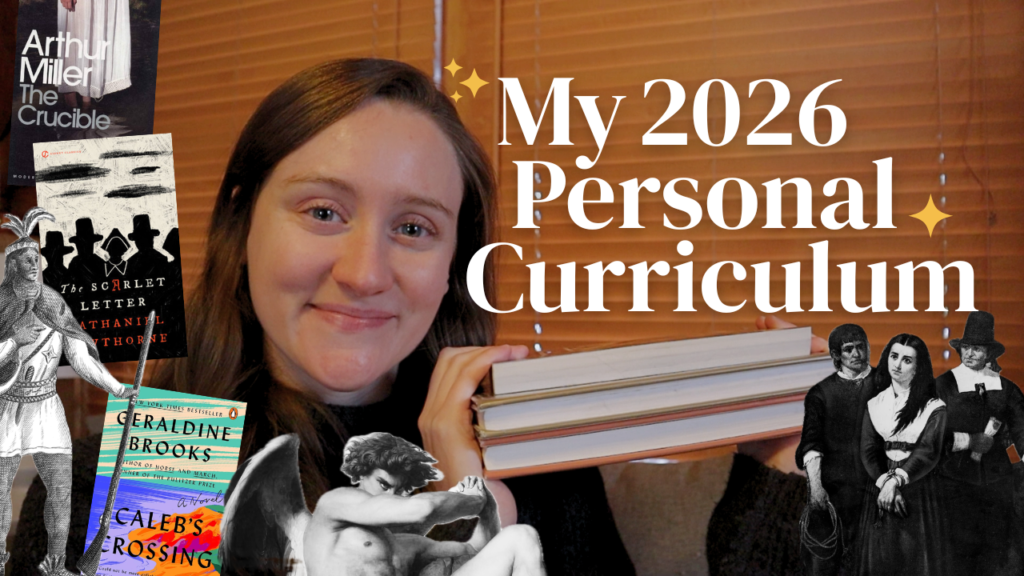
*This blog post is an addition to my YouTube video on my personal curriculum. You can watch it here.*
One of my goals for 2026 was to get back into learning through the practice of a personal curriculum. As a former homeschool student who really enjoyed university after completing all the general education courses, I’ve always loved a self-paced style of learning that focuses on the topics that interest me most.
To help support my goal to finish the historical fiction novel I’ve been working on, I’ve decided to dedicate my first “course” to researching the topics related to my story. My story is set during 1675-1676 in New England, which also happens to be the place and time in which King Philip’s War occurred. This conflict has been termed the “bloodiest conflict” in American history by many scholars, and saw fighting between the English colonists and the various Native American tribes living in the areas that currently make up the states Massachusetts, Rhode Island, and Connecticut, and even up into New Hampshire and Maine.
I knew very little about this part of American history before I began this writing project. During my drafting process last year, I would do sporadic and specific bits of research online needed for outlining. However, I want a better, broader, and more complete understanding of this conflict, and so I’ve decided to dedicate my very first personal curriculum to this topic.
My story will feature a variety of different issues and themes, including English-Indigenous relations, witchcraft, religious oppression and power, gender and race, and the figure of the devil, among others. Due to this wide range, I’ve titled this course: “Heathens, Witches, and New England: Religion, Power, and the American Imagination.”
So for this course, I have six units that take place over fifteen “weeks.” I put quotes around “weeks” because most every week has an assigned book or two for reading. I know that I’m too busy to be able to read everything in a week, so it’s totally okay if it takes me longer to get through everything. The core of this goal is the desire to learn and have fun doing it.
In addition, I’m sure there are going to be some chapters in these books which are less relevant to what I’m interested in, so I’m not strict about reading them cover-to-cover. I’m more interested in feeding that love for learning and pursuing the topics I’m interested in.
These texts and resources I found by doing some wide research, including checking out the most popular titles of each subject matter, taking a look at book reviews, and investigating to see who were the top scholars in the historical or cultural fields of study I was interested in. Most of these books are actually available through my local library, which is amazing. I’m always excited at the opportunity to make use of that resource.
Let’s dig into the curriculum!
“Heathens, Witches, and New England: Religion, Power, and the American Imagination.”
Course Description:
This course examines how early American religious thought shaped enduring ideas about evil, gender, race, and power in the United States. Focusing on seventeenth-century New England, the course explores Puritan theology, Indigenous Christianity, settler colonialism, witchcraft accusations, and King Philip’s War, alongside later literary and cultural reinterpretations. Through historical texts, religious writings, and fiction, students will trace how figures such as the “witch,” the “devil,” and the “savage” emerged as tools of social control—and how these figures were later reimagined, resisted, or reclaimed in American cultural thought, including feminist and Satanic countertraditions.
Learning Objectives:
- Analyze how religion played a part in early American power relations
- Understand the role of witchcraft and Satanic imagery in gendered and racial social control
- Compare Indigenous and colonial belief systems, and understand how they blend together in the figure of the “Christian Indian”
- Understand King Philip’s War as both historical event and cultural rupture
- Trace how early American fears persist in later American literature and culture
- Have fun!
Course Structure & Weekly Readings:
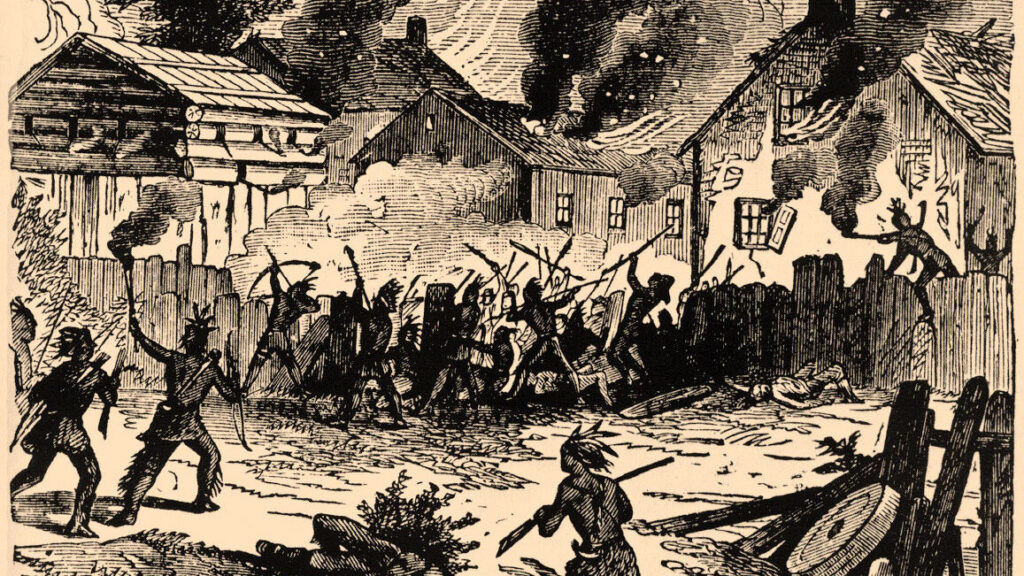
✍️ UNIT I: WORLD-MAKING IN SEVENTEENTH-CENTURY NEW ENGLAND
- overview of King Philip’s War
- the historical and religious construction of “evil”
- the “Devil” as epistemological framework
- New England Indigenous mythology
Week 1: Framing the Course
- The Name of War: King Philip’s War and the Origins of American Identity by Jill Lepore
Week 2: Puritan Cosmology and the Devil
- The Devil: Perceptions of Evil from Antiquity to Primitive Christianity by Jeffrey Burton Russell
- The Origin of Satan by Elaine Pagels
- “Young Goodman Brown” by Nathaniel Hawthorne
Week 3: Indigenous Religion & Mythology of New England
- The Algonquin Legends of New England by Charles Godfrey Leland
- Algonquian Spirit: Contemporary Translations of the Algonquian Literatures of North America by Brian Swann
- Native American Mythology by Hartley Burr Alexander (selected chapters)
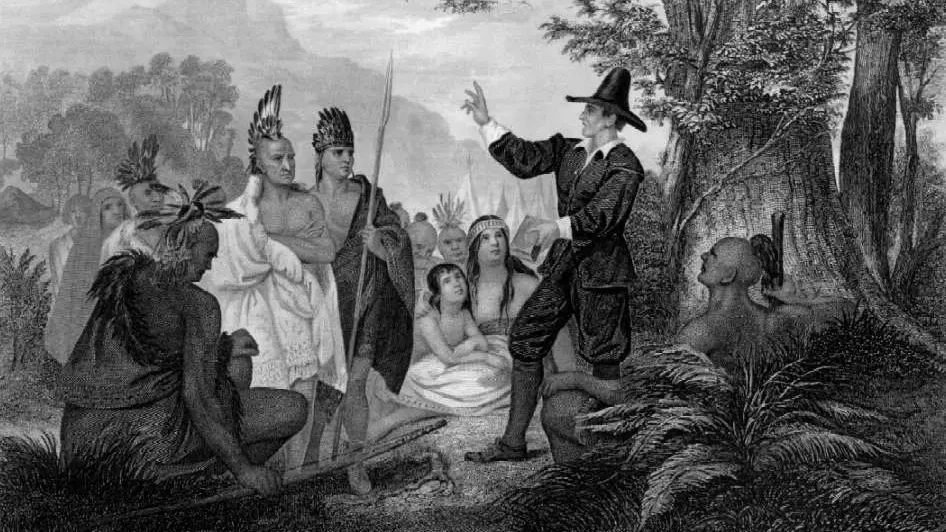
✍️ UNIT II: WAMPANOAG CHRISTIANITY & RELIGIOUS TRANSLATION
- missionary activity
- religious translation as cultural negotiation
- “Praying Indians”
- syncretism vs. coercion
- land as religious and cultural space
- colonial erasure
Week 4: Conversion, Translation, and Power
- Faith and Boundaries: Colonists, Christianity, and Community among the Wampanoag Indians of Martha’s Vineyard, 1600-1871 by David J. Silverman
- “The Missionary Journal of John Cotton, Jr., 1666-1678” by John Cotton Jr.
Week 5: Indigenous Christianity & Popular Religion
- “Native American Popular Religion in New England’s Old Colony, 1670-1770” by Douglas L. Winiarski
- “Indians, Missionaries, and Religious Translation: Creating Wampanoag Christianity in Seventeenth-Century Martha’s Vineyard” by David J. Silverman
Week 6: Land, Identity, and Dispossession
- Dispossession by Degrees: Indian Land and Identity in Natick, Massachusetts, 1650-1790 by Jean M. O’Brian
- The Common Pot: The Recovery of Native Space in the Northeast by Lisa Brooks
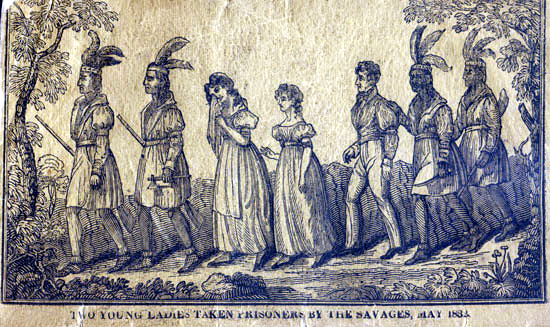
✍️ UNIT III: WAR, CAPTIVITY, AND MORAL PANIC
- theological crisis of violence
- Indigenous-centered history
- captivity narratives as propaganda
- gender, fear, and religious meaning
- retellings: whose stories endure?
Week 7: King Philip’s War
- Our Beloved Kin: A New History of King Philip’s War by Lisa Brooks
Week 8: Captivity and Colonial Self-Definition
- A Narrative of the Captivity and Restoration of Mrs. Mary Rowlandson (also known as The Sovereignty and Goodness of God) by Mary (White) Rowlandson
- Flight of the Sparrow by Amy Belding Brown
Week 9: Fictionalizing the Colonial Encounter
- Caleb’s Crossing by Geraldine Brooks
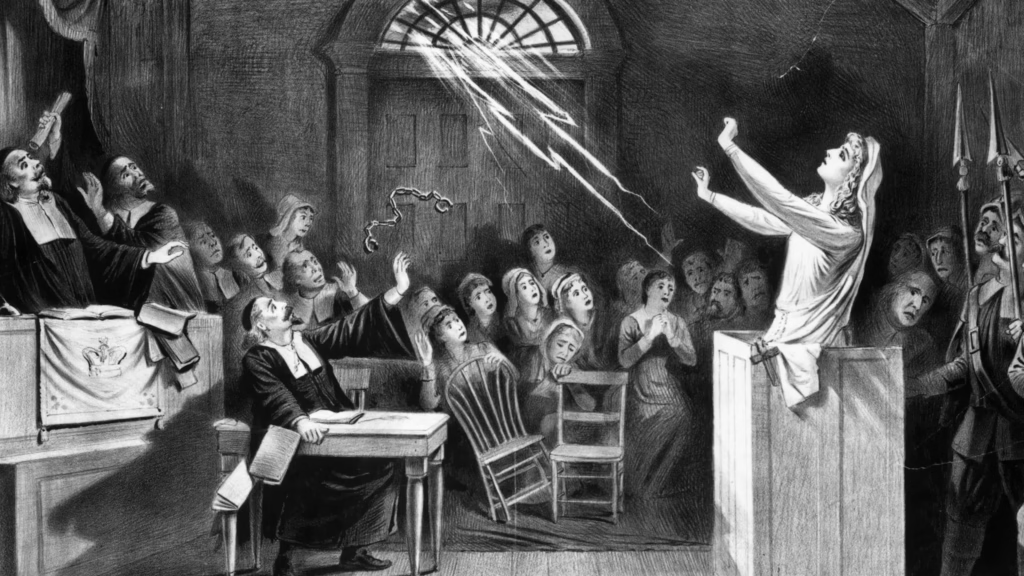
✍️ UNIT IV: WITCHCRAFT, GENDER, AND SOCIAL CONTROL
- the policing of women
- gendered suspicion
- property, inheritance, and fear
- economic and social tensions
- moral panic
Week 10: Witchcraft in Colonial New England
- The Devil in the Shape of a Woman: Witchcraft in Colonial New England by Carol F. Karlsen
Week 11: The Salem Witch Trials
- Salem Possessed: The Social Origins of Witchcraft by Paul Boyer
- “The Minister’s Black Veil” by Nathaniel Hawthorne
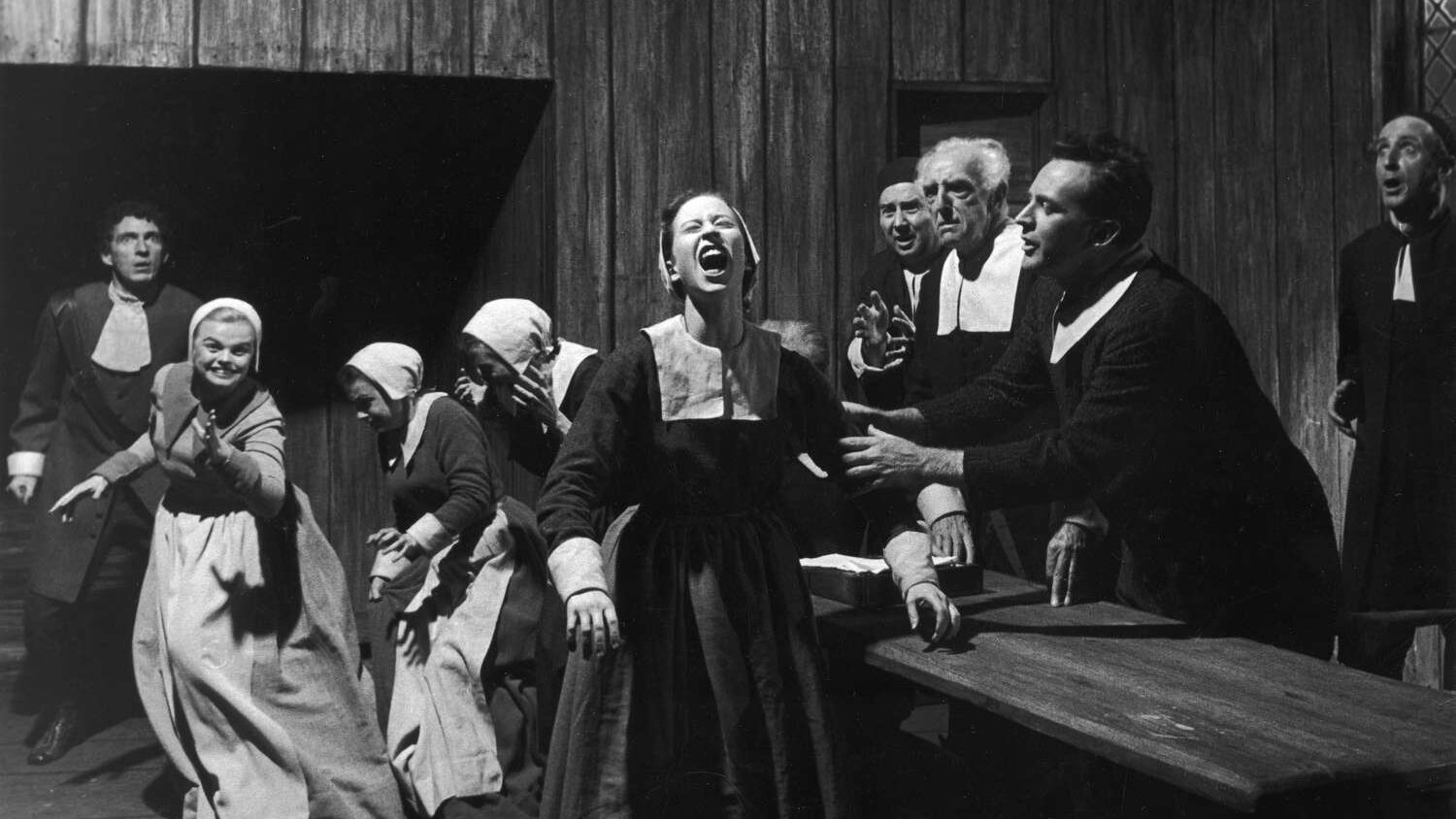
✍️ UNIT V: AMERICAN MYTHMAKING
- Puritanism in modern American literature
- allegory
- the afterlife of Puritanism
- historical memory
- Cold War parallels
Week 12: Puritanism in the American Literary Imagination
- The Scarlet Letter by Nathaniel Hawthorne
Week 13: Witchcraft as Political Allegory
- The Crucible by Arthur Miller
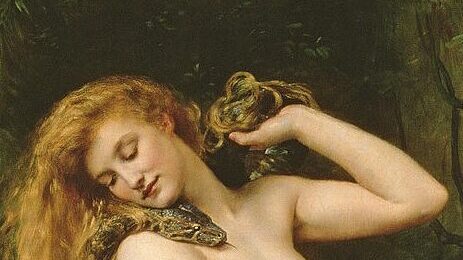
✍️ UNIT VI: SATAN, FEMINISM, AND MODERN AMERICAN COUNTERCULTURE
- Lucifer as liberator
- Gendered rebellion
- Religious freedom
- American counterculture
Week 14: Satanic Feminism
- Satanic Feminism: Lucifer as the Liberator of Woman in Nineteenth-Century Culture by Per Faxneld
Week 15: Modern Satanism and American Identity
- Children of Lucifer: The Origins of Modern Religious Satanism by Ruben van Luijk
I want to conclude this course with something fun that ties these studies together, so I’m planning on taking two field trips! I’m lucky enough to live in New England, where the historical events of my story unfolded, and I’d like to see some of these places myself to get an immersive feel for what it was like.
First, I want to visit Wethersfield, CT, where several people were tried for witchcraft decades before the Salem Witch trials. There’s a museum that offers tours there. I also want to visit Plymouth, MA, which has the Plimoth Patuxet Museums, where there’s a living historical museum that features reenactments of what it was like living in colonial New England, as well as reenactments of Indigenous life at that time, such as cooking, crafting, and cultural practices.
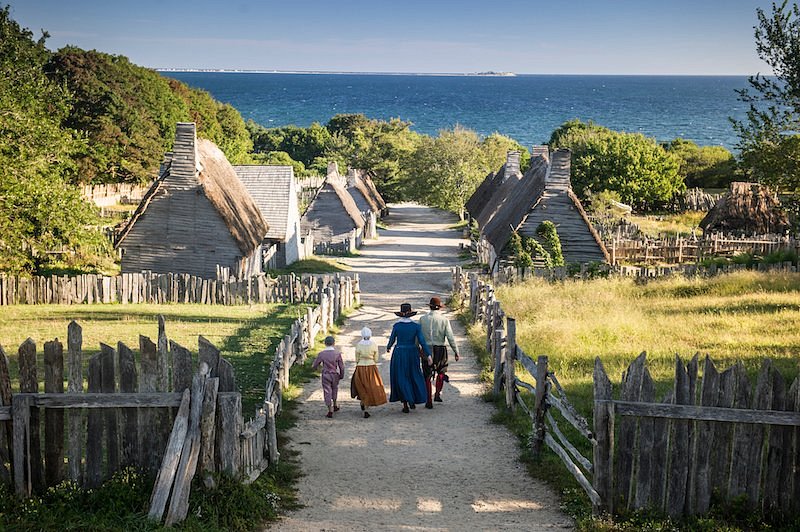
I think visiting these places and getting to see what I’ve learned firsthand through my studies would be the perfect conclusion to the course.
If you’re interested in learning more about my personal goals for 2026, you can read that blog post here!
Thanks for reading all about my first ever personal curriculum course. Have you tried this trend? Let me know what you’re learning about in 2026!
Until next time,
~ A.K. Aspen 🌟
Pingback: 📚 My 2026 Creative Goals | akaspen.com